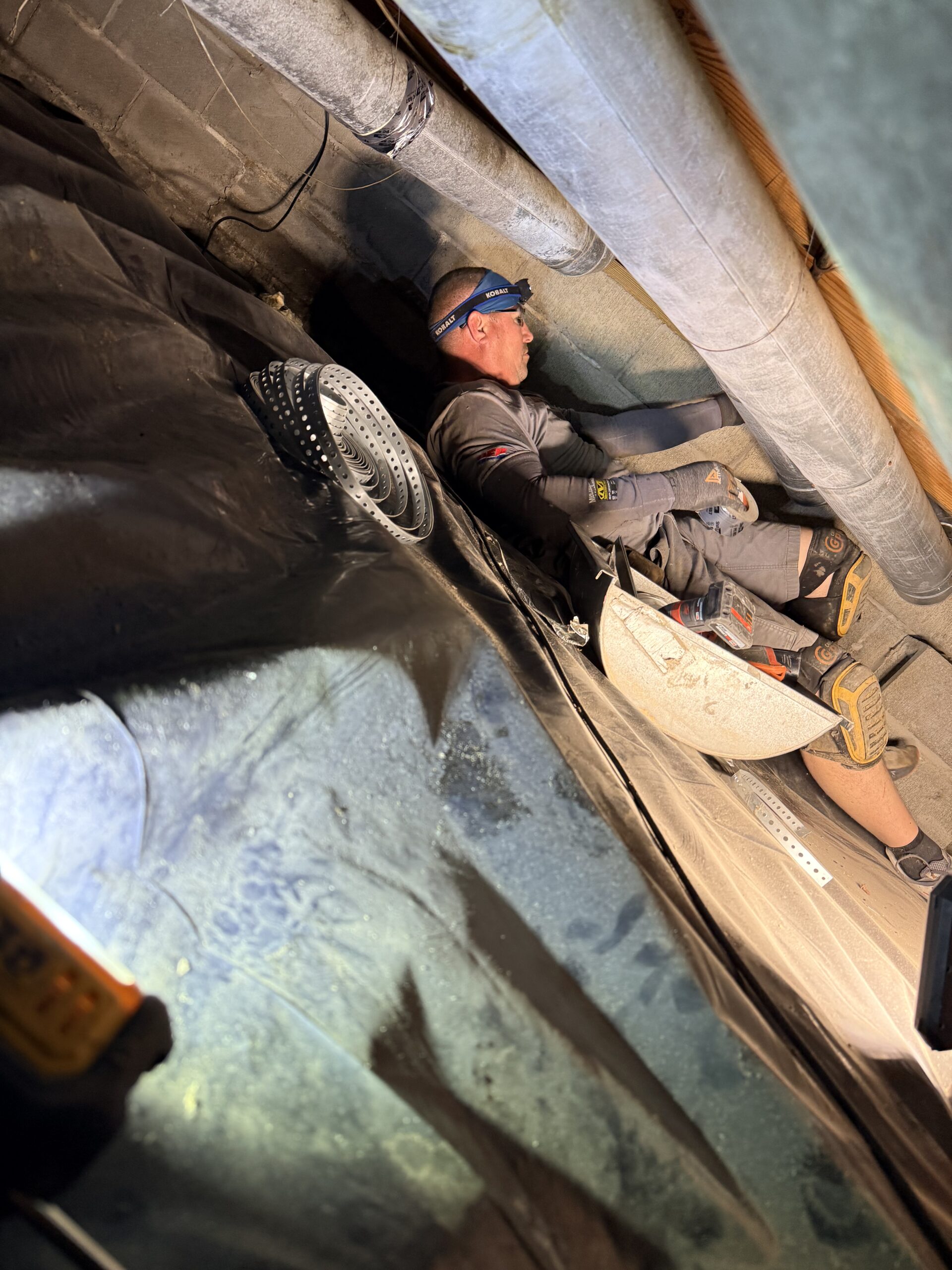


When homeowners think about heating and cooling problems, they usually blame the furnace or air conditioner.
Sometimes they’re right.
But many comfort problems actually begin somewhere else…
Inside the ductwork.
At Good Guys Home Services, it’s not unusual for our technicians to spend time crawling through crawl spaces or navigating hot attics—not because the equipment is broken, but because we’re tracking down airflow problems that can’t be seen from inside the house.
Sometimes the equipment is working exactly as it should.
The air simply isn’t getting where it needs to go.
Your HVAC System Is More Than Just the Equipment
Think of your HVAC system like your body’s circulatory system.
The furnace or air conditioner is the heart.
The ductwork is the arteries.
Even if the heart is healthy, blocked or damaged arteries prevent everything from working properly.
Your ductwork carries conditioned air to every room in your home and returns air back to the equipment.
If those air pathways have problems, your comfort suffers.
Common Ductwork Problems We Find
Our technicians regularly discover issues such as:
Disconnected ductwork
Sections can separate over time, sending conditioned air into the attic or crawl space instead of your living space.
Crushed or damaged ducts
Heavy storage, previous repairs, animals, or age can restrict airflow.
Poorly supported ductwork
Supports can stretch or fail over the years, allowing ducts to sag.
Sagging ducts may reduce airflow and place additional stress on flexible duct connections.
Air leaks
Small gaps and loose connections allow conditioned air to escape before it reaches the rooms in your home.
That means you’re paying to cool or heat areas no one lives in.
Improper duct sizing
Even a brand-new furnace or air conditioner can’t perform properly if the duct system isn’t designed to move the correct amount of air.
Too little airflow can reduce efficiency and comfort.
Too much airflow can create excessive noise and uneven temperatures.
Signs Your Ductwork May Need Attention
You may have a duct issue if you notice:
✅ Some rooms are always warmer or colder
✅ Weak airflow from certain vents
✅ High utility bills
✅ Your HVAC system seems to run constantly
✅ Dust buildup throughout the home
✅ Hot or cold spots between rooms
These symptoms don’t always mean the equipment is failing.
Sometimes the duct system simply needs repairs or improvements.
Why Good Ductwork Matters
Proper airflow is one of the most important factors in HVAC performance.
Well-designed and properly maintained ductwork can help:
- Improve comfort throughout the home
- Deliver more consistent temperatures
- Support energy efficiency
- Reduce unnecessary strain on heating and cooling equipment
- Help your HVAC system perform as intended
Sometimes the Hardest Part of the Job Isn’t the Equipment
Many of the most challenging HVAC repairs don’t happen in front of the furnace.
They happen in places homeowners rarely see.
Our technicians regularly work in:
- Crawl spaces
- Attics
- Knee walls
- Mechanical chases
- Basement ceilings
Finding the root cause of an airflow issue often requires following the entire air distribution system—not just replacing parts.
That’s why we take the time to inspect the complete HVAC system whenever necessary.
Good Guys Pro Tip 💡
If your home has one room that’s always too hot in the summer or too cold in the winter, don’t automatically assume you need a new furnace or air conditioner. The problem may be hidden in the ductwork. A complete HVAC evaluation includes looking beyond the equipment to find the true source of the issue.
Frequently Asked Questions
Yes. Damaged or improperly designed ductwork can reduce airflow and create uneven temperatures throughout the home.
Many duct systems last 20–30 years or more, but supports, seals, insulation, and connections should be inspected periodically.
Yes. Air leaking into an attic or crawl space means your HVAC system has to work harder to maintain indoor temperatures.
Absolutely. Installing new equipment on an existing duct system without evaluating airflow can limit the performance of the new system.
No. Each room has different heating and cooling requirements based on size, windows, insulation, orientation, and occupancy.
Proper duct design helps deliver the appropriate amount of airflow to each area.

Connect with our experts in just one click
Download the App Now for Instant AC, Plumbing, Roofing, and Furnace Repair Services!