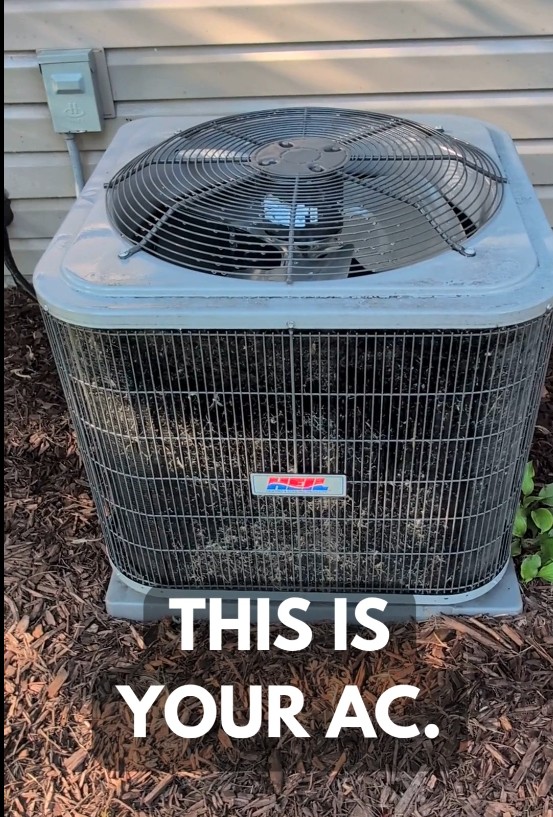


Your outdoor air conditioner works hard every summer to remove heat from your home.
But unlike most appliances inside the house, your air conditioner sits outside where it is constantly exposed to dirt, dust, pollen, cottonwood, leaves, grass clippings, and other debris.
Over time, that buildup can reduce airflow and make your air conditioner work harder than it was designed to.
Many homeowners are surprised to learn that one of the most important parts of annual air conditioning maintenance is simply making sure the outdoor condenser stays clean.
What Does the Outdoor Condenser Do?
Your outdoor unit is called the condenser.
Its job is to release the heat that your home no longer wants.
As refrigerant leaves your home carrying heat, it travels to the outdoor condenser where air passes across the coil and removes that heat.
When airflow is unrestricted, the refrigeration cycle operates much more efficiently.
What Happens When the Condenser Gets Dirty?
As dirt builds up on the condenser coil, airflow becomes restricted.
The system must work harder to release heat.
That can lead to:
✅ Longer cooling cycles
✅ Higher electric bills
✅ Reduced cooling performance
✅ Additional strain on the compressor
✅ More wear on electrical components
While a dirty condenser may not immediately cause an air conditioner to fail, it can contribute to reduced performance and unnecessary stress on the system.
Signs Your Condenser May Need Cleaning
You don’t always need special tools to notice a problem.
Look for:
- Grass clippings covering the coil
- Cottonwood buildup
- Dirt packed between the fins
- Leaves around the base
- Pet hair
- Weeds growing into the unit
- Excessive dust
If you cannot easily see through the coil from the outside, it may be time for professional maintenance.
Can Cleaning the Condenser Lower Electric Bills?
A clean condenser allows heat to transfer more efficiently.
When the system can reject heat more effectively, it often doesn’t need to run as long to cool the home.
Depending on the condition of the equipment and other factors, improved airflow may help reduce unnecessary energy consumption.
Can I Clean My Own Air Conditioner?
Homeowners can safely remove:
- Leaves
- Grass
- Sticks
- Surface debris
around the condenser.
However, professional cleaning is recommended because condenser fins are delicate and can be damaged by excessive water pressure or improper cleaning techniques.
A technician also inspects the equipment while cleaning, which can help identify worn electrical components, refrigerant issues, or other developing problems.
Why Annual AC Maintenance Matters
Cleaning the condenser is only one part of a complete air conditioning tune-up.
During annual maintenance, technicians also inspect:
- Refrigerant performance
- Electrical components
- Capacitors
- Contactors
- Temperature split
- Blower operation
- Condensate drainage
- Air filters
- Overall system performance
The goal is to identify small issues before they become larger repairs.
Small Problems Become Expensive Repairs
Many major HVAC repairs begin with relatively minor issues that go unnoticed.
Routine maintenance helps identify problems early, when they are often easier and less expensive to address.
That’s one reason annual maintenance is recommended by many equipment manufacturers and HVAC professionals.
Protect Your Air Conditioner Before Problems Start
Your air conditioner is one of the largest mechanical investments in your home.
Routine maintenance—including professional condenser cleaning—can help improve efficiency, support reliable operation, and identify developing issues before they become costly repairs.
If your air conditioner hasn’t been professionally serviced recently, scheduling an annual tune-up is one of the best ways to help keep it operating at its best.
Frequently Asked Questions
Most residential systems benefit from professional cleaning and inspection once each year, typically before or during peak cooling season.
A dirty condenser can reduce cooling performance and efficiency. While it is not the only possible cause of cooling problems, restricted airflow can contribute to poor system performance.
It can. When the condenser cannot release heat efficiently, the air conditioner may run longer to cool the home, which can increase energy use.
Our professional air conditioning maintenance visits include inspecting and cleaning the outdoor condenser as part of a comprehensive system evaluation.
No. High-pressure water can damage the delicate aluminum fins on the condenser coil. Cleaning should be performed using methods appropriate for HVAC equipment.

Connect with our experts in just one click
Download the App Now for Instant AC, Plumbing, Roofing, and Furnace Repair Services!